
Ask a child in a well-resourced private school about their favourite book, and they will usually have an answer ready. Ask the same question in many government schools across India, and the honest answer is often that there was never really a library to choose from in the first place. Textbooks may exist, but storybooks, reference materials, and a quiet space to enjoy reading are far less common.
The Reading Crisis Hiding in Plain Sight
The scale of this gap shows up clearly in national data. The Annual Status of Education Report (ASER) 2024, a large-scale rural survey conducted by Pratham, found that only 23.4% of Class 3 students in government schools could read a Class 2-level text, an improvement from 16.3% in 2022, but still a concerning figure for children three years into formal schooling. By Class 5, that figure rises to 44.8%, and by Class 8, to 67.5%.
Haryana was among the states that recorded a notable improvement in reading levels between 2022 and 2024, demonstrating that the right interventions, implemented consistently, can make a meaningful difference.
A functioning school library is one of the most direct ways to build on this momentum. Children who read for pleasure, not just for exams, can develop stronger vocabulary, comprehension, curiosity, and independent learning habits. But that only happens when books are accessible, appealing, and supported by an environment that encourages children to read.
Why School Libraries Matter, and Why Smart Libraries Matter More
Many government schools that technically have a library may still lack the environment needed to make it effective. A cupboard of old books, limited furniture, poor lighting, or a room that is rarely used does not necessarily create a place where children want to spend time reading.
Creating a successful library requires more than simply donating books. It requires a welcoming learning environment where students can comfortably read, explore subjects, and develop independent learning habits.
This is where the concept of a smart library becomes valuable. A smart library can combine traditional books with digital resources and technology-supported learning, making reading and exploration more engaging for today’s students.
For schools that need support in creating such spaces, a dedicated NGO for school library development or an NGO for smart library setup can help transform an unused room into a functional and engaging learning environment.
Sahyog Care for You’s Library Initiative in Gurgaon
Sahyog Care for You is taking this need directly to government schools in Gurgaon, Haryana, by transforming existing library rooms into proper, student-friendly smart libraries.
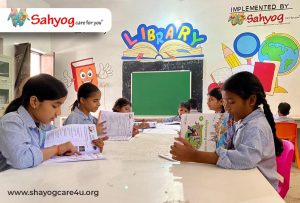
Instead of treating library development as simply a book donation, the organisation focuses on creating a complete learning space. The process begins with the renovation of an existing library room, including whitewashing and painting to give the space a fresh and welcoming appearance.
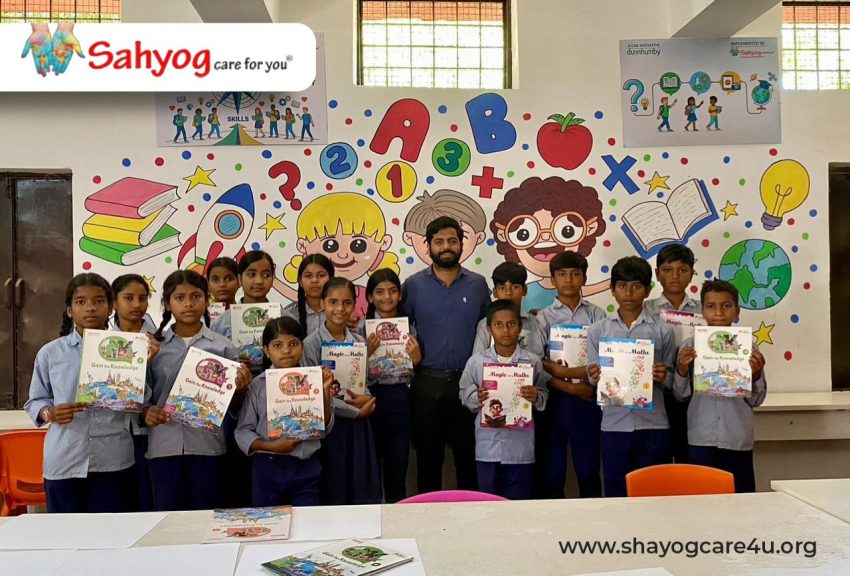
The transformation also includes BALA (Building as Learning Aid) paintings, which turn walls into educational tools through colourful and engaging learning visuals. These elements help make the room more interactive while encouraging children to learn beyond conventional textbooks.
To make the library comfortable and suitable for regular use, Sahyog Care for You also provides fans and proper lighting. The room is further equipped with a computer system to introduce students to digital learning and information resources.
The physical library infrastructure includes bookshelves, an almirah, chairs, tables, and other essential furniture, creating an organised and comfortable space where students can read, study, and explore independently.
Through this comprehensive renovation, what may once have been an unused or underdeveloped room is transformed into a proper smart library designed for regular student use.
More Than Just Books
A successful school library is not simply about the number of books on a shelf. It is about creating an environment where children feel comfortable asking questions, discovering new subjects, reading stories, and learning independently.
By combining books, digital resources, educational wall paintings, computers, comfortable furniture, proper lighting, and organised storage, Sahyog Care for You’s library initiative creates a more complete learning environment for students.
The initiative also complements the organisation’s broader education efforts, including literacy support, remedial education, and technology-enabled learning. A well-designed library gives children an additional space where they can strengthen reading habits and continue learning outside regular classroom lessons.
Why This Model Matters
A library alone will not solve India’s learning challenges, but it can remove one of the most basic barriers: lack of access to books and a suitable space for reading.
For students in government schools, a renovated and well-equipped library can become a place of curiosity, creativity, and independent learning. For teachers, it can provide additional resources to support classroom learning. For the wider community, it can represent a meaningful investment in children’s education.
For schools, donors, and communities looking for a genuine NGO for school library development or an NGO for smart library setup, this kind of comprehensive approach shows how infrastructure and learning resources can work together to create a lasting impact.
Get Involved
Expanding this initiative to more government schools in Gurgaon and beyond will require continued support. Funding books, computers, furniture, renovation, or other library resources can help create learning spaces where children have better access to knowledge and opportunities.
Every renovated room can become more than a library. It can become a space where children discover new interests, develop a love for reading, and build the confidence to imagine a bigger future.
For Sahyog Care for You, the goal is simple: transform underused spaces into vibrant learning environments and make quality reading and learning resources more accessible to children in government schools.