
Step 1: Unbox The Problem First
Before any hardware arrives, it helps to know exactly what you’re installing it against. Government data from UDISE+ shows that around half of India’s schools still lack access to basic modern educational technology, and in rural areas specifically, only about 28% of government schools have functional internet access. The COVID-19 pandemic made the cost of this gap painfully clear, a nationwide study found that a large majority of children in government schools received no learning materials at all during lockdown periods, while better-resourced schools shifted to digital platforms with comparatively little disruption. That gap doesn’t close on its own, and every year it stays open, another cohort of students enters the job market a step further behind their better-resourced peers. That’s the box this whole project is meant to open.
Step 2: Check The Room Before You Mount Anything
Most installation guides skip straight to the hardware. This one can’t, because a smart board mounted on a crumbling wall, in a room with no working electrical point, is a smart board that will fail within its first monsoon season. Any serious rollout starts with assessing the room itself, waterproofing, ventilation, and structural repairs where needed, because installing expensive technology into a space that can’t support it is simply money spent twice.
Step 3: Mount The Hardware
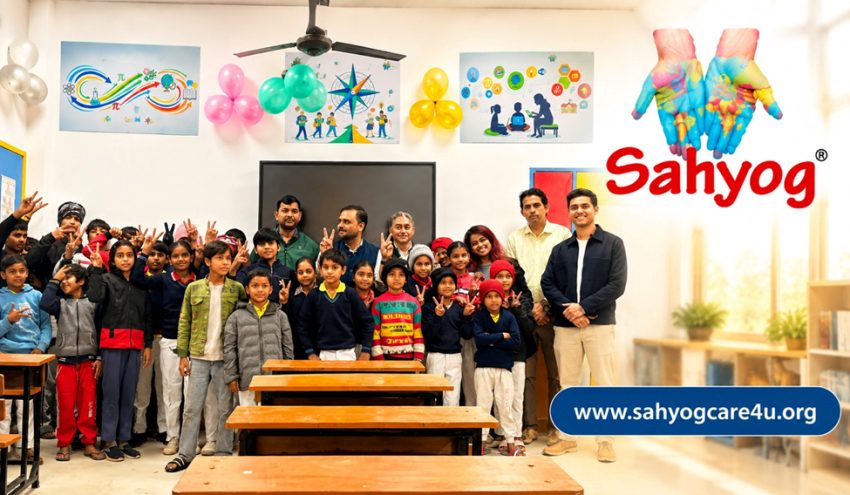
Only once the room is sound does the actual equipment go in. A smart board, paired with digital content and interactive learning tools, sits at the centre of the installation, but it doesn’t sit there alone. BALA, or Building as Learning Aid, murals go up on the surrounding walls, turning the room itself into a teaching surface, and restored furniture replaces whatever was broken or missing before. None of this is cosmetic, a smart board in an otherwise bare, uncomfortable room gets used far less than one in a space child actually want to spend time in.
Step 4: Calibrate The Teacher, Not Just The Screen
Here’s the step most installations skip entirely, and it’s the one that decides whether any of the previous three steps actually mattered. A smart board with no trained teacher behind it tends to sit mostly unused, a few demonstration lessons in its first month, then a slow return to the blackboard once the novelty wears off. This is exactly where a genuine NGO for Digital Education earns its name, by building teacher training into the installation itself rather than treating it as an optional add-on for schools that happen to have the budget for it afterward. Calibrating the person using the equipment matters just as much as calibrating the equipment itself.
Step 5: Run The Diagnostic
Every installation deserves proof it actually works, and this one already has it. In one government girls’ school in Bihar’s Gaya district, introducing AI-assisted, tablet-based language apps helped English literacy levels jump from just 32% to 71% within a single year. That’s the diagnostic result that justifies the entire four-step process above, technology, properly installed in a properly prepared room, with a properly trained teacher behind it, moves outcomes faster than almost any other classroom intervention available.
Step 6: Scale The Installation

A single successful classroom proves the concept. Scaling it proves the model. Sahyog Care for You’s SmartShala programme has already reached 14 states across India, from Jammu & Kashmir to Tamil Nadu, supporting an estimated 16,000 children in government schools. That’s not fourteen separate pilot projects, it’s the same six-step installation sequence repeated consistently, holding its quality whether it lands in a border state or a coastal one.
Warranty Terms: What Csr Funders Should Ask For
Before signing off on any technology-focused CSR allocation, it’s worth asking what’s actually covered. Does the funding include the room renovation, or just the hardware? Does it include teacher training, or just the delivery truck? Does anyone check back in six months to confirm the board is still being used? A properly structured CSR Smart Board Installation should answer yes to all three, because a board installed without these guarantees tends to become exactly the kind of underused, eventually abandoned equipment that gives technology-focused CSR a bad name. This is also where due diligence pays for itself, a funder who asks these three questions upfront rarely ends up funding a dust-covered board a year later. The difference between a flashy unboxing photo and a classroom that’s still running the technology a year later comes down entirely to whether these warranty terms were built in from the start.
Step 7: Document What Changed
A proper installation doesn’t end at setup; it ends with proof the investment worked. Literacy scores that move, attendance that improves, a teacher who’s visibly more confident running a digital lesson than they were six months earlier, these are the outcomes a CSR committee should expect to see documented, not just a photograph of the board on the day it arrived.
Final Inspection
Strip away the installation-manual framing, and what’s actually being built here is simple: a classroom where a child’s access to modern learning tools doesn’t depend on their postal code. Every properly completed installation, room repaired, hardware mounted, teacher trained, outcomes documented, moves that goal one classroom closer to reality.
Get Involved
Extending this installation sequence to more classrooms takes continued investment. Funding a SmartShala classroom renovation, sponsoring a smartboard installation complete with teacher training, or backing the six-month follow-up that confirms the technology is still being used are all concrete ways to help. Companies and donors specifically searching for a proven NGO for Digital Education partner with a documented, repeatable process will find exactly that evidence across 14 states already. And anyone structuring their next CSR Smart Board Installation around outcomes that actually last, not just a delivery date, need only ask for the same warranty terms this model already builds in from step one.