
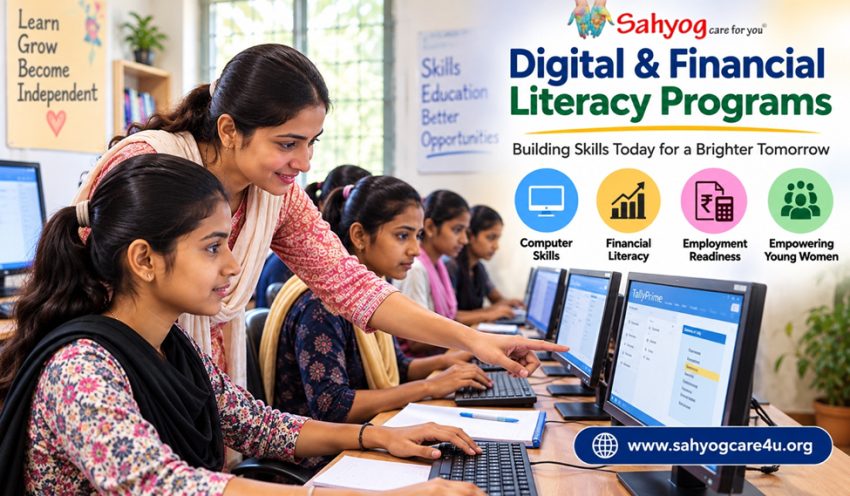
Everyone loves to celebrate the moment a woman or a young person starts earning. The first paycheck, the first sale, the first time they hand over money they made themselves. What almost nobody talks about is what happens next — whether that money stays safe, grows, or quietly disappears because no one ever taught them how to hold onto it.
That’s the gap Sahyog Care for You’s Financial and Digital Literacy program is built to close, as part of its wider Youth Empowerment and livelihood work across Delhi.
Earning Money and Keeping Money Are Two Different Skills
Here’s a truth that rarely makes it into success stories: someone who has never had a bank account of their own, never budgeted a household income, or never learned to tell a genuine payment request from a fraudulent one is still vulnerable — even with steady income finally coming in. Money that isn’t banked safely, saved deliberately, or protected from online fraud has a way of vanishing just as fast as it arrived.
Teaching someone to earn without also teaching them to manage what they’ve earned only solves half the problem. The other half is financial and digital literacy together, not as two separate subjects, but as one connected skill.
Money Smart: Building Real Financial Confidence
This is exactly why Sahyog Care For You runs a dedicated Financial and Digital Literacy program, aimed at empowering individuals with the knowledge and skills needed to manage their finances effectively and navigate the digital world with confidence.
The program centres on practical, everyday essentials: budgeting, banking, and online safety — the building blocks that let someone make informed financial decisions instead of guesswork-driven ones. For many participants, this is the first time they’ve been shown how to actually open and use a bank account, plan a monthly budget around real income and expenses, or save with intention rather than by accident.
This is what a genuine NGO for Financial Literacy should look like in practice — not a generic lecture on saving money, but structured education delivered specifically to the people who are earning real income, often for the first time, at precisely the moment they need it most.
Web Smart: Safety in a Digital-First World
The same program treats digital confidence as inseparable from financial confidence. As more of daily life — payments, savings, communication, even job applications — moves onto a phone screen, knowing how to use digital tools safely has become just as essential as knowing how to budget.
The program helps participants utilise digital tools confidently while staying alert to online safety risks: recognising a fraudulent message before it costs them money, understanding how to protect login credentials, and building the basic digital fluency needed to transact, apply for jobs, and communicate online without becoming an easy target for exploitation.
This is what a genuine NGO for Digital Literacy has to get right — treating digital safety not as a bonus skill, but as something woven directly into financial training, because today, managing money safely and managing a screen safely are, for most people, the same task.
Why These Two Skills Have to Travel Together
Financial literacy without digital literacy leaves a dangerous gap. Someone might understand how to budget and save, but if they can’t spot a fraudulent payment request, their savings are still at risk. Digital literacy without financial literacy is just as incomplete — knowing how to use an app means little without understanding what a healthy budget or a safe savings habit actually looks like.
That’s why Sahyog Care For You brings both together under one program rather than treating them as separate courses. Participants don’t walk out having learned only to save, or only to spot a scam — they walk out understanding both: how to grow what they earn, and how to protect it from the threats specifically designed to take it away.
Part of a Larger Push for Self-Reliance
This program doesn’t exist in isolation. It sits inside Sahyog Care for You’s broader Youth Empowerment initiative, alongside Skill Development and Job Fairs & Employment programs — recognizing that vocational training, employment access, and financial confidence all need to move together for real self-sufficiency to take hold. A young person who has learned computer skills, Tally, or BPO training through the organization’s centers across Delhi still needs the financial and digital know-how to protect the income that training eventually brings in.
Confidence That Extends Beyond the Bank Account
There’s something important happening here beyond the obvious financial benefit. Someone who understands their own money — who can read a bank statement, plan a budget, and spot a scam before it reaches them — carries that confidence into other parts of life too. They negotiate more firmly, ask more questions, and stop deferring financial decisions to someone else by default, simply because they finally have the knowledge to make those decisions themselves.
Why This Work Deserves Support
Extending this model — financial confidence and digital safety, taught together — to more women and youth takes continued, deliberate support. Funding a financial literacy cohort, sponsoring a round of digital safety training, or backing the broader Youth Empowerment program that makes this education possible are all concrete ways to help.
Anyone specifically looking for a genuine NGO for Financial Literacy worth funding will find a program already built around the real, practical needs of people managing money for the first time. And anyone searching for an NGO for Digital Literacy partner need only look at how directly this training protects the everyday financial lives it’s designed to serve — because teaching someone to earn without teaching them to protect what they’ve earned simply isn’t enough.