
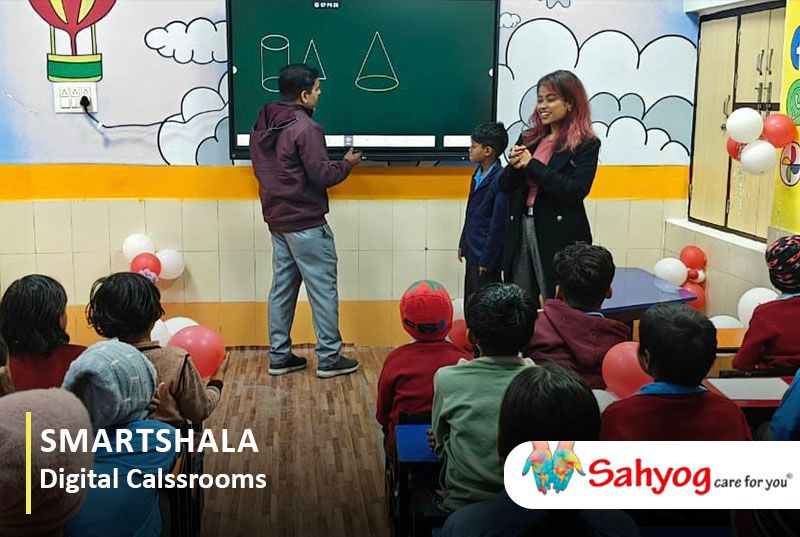
Two students can sit through the exact same lesson and come away with completely different levels of understanding, not because one is smarter, but because one learns better by hearing, another by seeing, and a third by doing. A single teacher, one blackboard, and forty students rarely has room to accommodate all three at once. Tech enabled learning exists precisely to close that gap, adapting the lesson to the learner rather than forcing every learner to adapt to a single, fixed method of teaching.
What Actually Makes Learning “Tech Enabled”
The term gets used loosely, but genuine tech enabled learning has a few consistent features. It gives students immediate feedback rather than waiting days for a corrected test to come back. It lets a struggling student repeat a concept at their own pace without holding up the rest of the class, and lets a quicker student move ahead without getting bored. It presents the same idea in multiple formats, a video, an interactive quiz, a visual diagram, so that different kinds of learners have a real chance to grasp it. None of this replaces a teacher, it gives a teacher tools to reach more of the classroom at once, rather than the handful of students who happen to learn best from a lecture and a blackboard.
The Evidence Is Already There
The impact shows up quickly where this approach is properly implemented. In one government girls’ school in Bihar’s Gaya district, introducing AI-assisted, tablet-based language apps helped English literacy levels rise from just 32% to 71% within a single year, students engaging with interactive, self-paced content in a way a traditional textbook lesson rarely achieves at that speed. Yet this kind of outcome remains the exception rather than the norm. Government data shows roughly half of India’s schools still lack access to basic modern educational technology, and in rural areas, only about 28% of government schools have functional internet access, leaving most students without any real exposure to tech enabled learning at all.
How Sahyog Care for You Delivers This in Practice
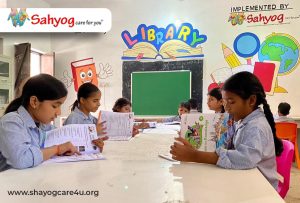
Sahyog Care for You’s SmartShala programmed was built specifically to close this gap, and to do it properly rather than symbolically. Classrooms are equipped with smart boards, digital content, interactive quizzes, and other learning tools that let a single lesson reach student at different paces and learning styles simultaneously, the same underlying principle behind the Gaya district results. Recognizing that hardware alone rarely changes outcomes, the programmed also runs dedicated teacher training, ensuring educators can actually use these tools well in daily lessons rather than letting them sit unused after installation. This model has already reached 14 states across India, from Jammu & Kashmir to Tamil Nadu, supporting an estimated 16,000 children with a genuinely interactive classroom experience. Organizations serious about being a real NGO for Tech Enabled Learning have to build this kind of full package, technology, training, and follow-through together, rather than treating a smartboard delivery as the finish line.
Why This Sets a Standard Worth Following
What separates a genuinely effective programmed from a well-intentioned but shallow one is consistency: the same quality of installation, the same depth of teacher training, and the same follow-through whether the classroom sits in a border state or a coastal one. This is the kind of standard people are usually hoping to find when searching for the best NGO in India to support in the education space, not a single flagship classroom held up as proof of concept, but a model that holds its quality across dozens of very different locations. Sahyog Care for You’s multi-state reach, built on a repeatable, well-documented process rather than one-off installations, reflects exactly the kind of consistency that separates a genuinely reliable partner from a good intention that never quite scales.
Get Involved
Extending tech enabled learning to more classrooms depends on continued support. Whether it’s funding a SmartShala classroom, sponsoring teacher training, or simply spreading awareness about what’s possible when the right technology reaches the right classroom, every contribution helps close the gap between students who get access to modern learning tools and those who don’t. For companies and donors specifically looking for an NGO for Tech Enabled Learning with a documented, multi-state track record, or evaluating who genuinely deserves to be called the best NGO in India in this space, Sahyog Care for You’s SmartShala model offers exactly that evidence.