
OBJECT ONE: THE WEAPON
Years of training go into the way a soldier’s hand holds a rifle, steady, precise, second nature after enough repetition that the body stops thinking about it altogether. That same hand, that same discipline, doesn’t disappear the day an injury in service changes what the body can do. What disappears, far too often, is anyone’s plan for what that hand does next.
THE GAP IN BETWEEN
This is the part that rarely gets talked about. A soldier injured in the line of duty is honored, rightly, for the sacrifice. But honor doesn’t automatically come with a next career attached, and a civilian job market that still associates “disability” with “limitation” rarely goes out of its way to offer one. The result is a gap, sometimes years wide, between the moment of injury and the moment someone is actually equipped to build a new livelihood.
OBJECT TWO: THE MOUSE
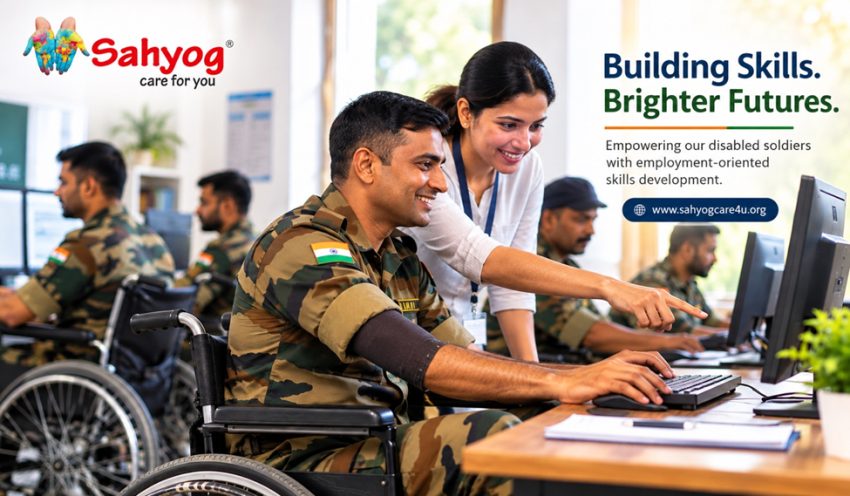
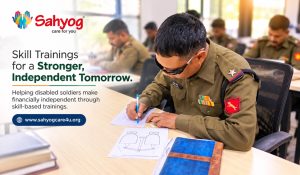
Sahyog Care for You built its response specifically for this gap. Recognizing that self-sufficiency and skill empowerment matter just as much after an injury as before one, the organization runs specialized short-term courses designed thoughtfully for Divyang, or differently-abled, individuals, covering cyber security, asset and liability management, emotional intelligence, and stress management. These aren’t generic awareness sessions, they’re practical, employment-oriented skills chosen specifically to equip participants with the tools to navigate what comes next with confidence, resilience, and a genuine sense of purpose. This is exactly the kind of targeted, dignity-first work a genuine NGO for disabled soldiers needs to deliver, treating injury as a change in circumstance, not a ceiling on ambition.
THE SAME HAND, A DIFFERENT GRIP
The outcome is concrete rather than symbolic. Through the acquisition of digital skills, participants gain genuine access to desk-based jobs, opening doors to meaningful employment and real financial independence rather than dependence on a pension alone. No physical limitation stands in the way of that progress by design. They may not wield a rifle the way their peers in active service still do, but they’re holding a mouse with just as much pride, shaping a future in the digital world that stands as its own quiet testament to determination, courage, and a spirit that didn’t change when the body did.
WHEREVER THAT HAND IS
This work doesn’t stop at a single training center or a convenient handful of cities. Programs built for India’s uniformed community run across the country, from the coasts of Trivandrum to the hills of Uttarakhand, the plains of Delhi, Uttar Pradesh, and Haryana to the deserts of Rajasthan, the fields of Punjab, the valleys of Jammu & Kashmir, and the heartlands of Odisha. A disabled soldier shouldn’t need to live near a major metro to find this kind of support, and being a genuine NGO near me, wherever that soldier happens to be stationed, settled, or recovering, is exactly what makes the difference between a programme that exists on paper and one that actually reaches him.
TWO OBJECTS, ONE PURPOSE
A rifle and a mouse look nothing alike, and they’re not meant to. What connects them is the hand holding each one, and the discipline that carries over from one to the other without needing to be relearned from scratch. Teaching that hand a new grip isn’t charity, it’s recognizing that the skill was never the problem, only the tool had changed.
Get Involved
Supporting this work means funding a training cohort, sponsoring the equipment a disabled soldier needs to pursue a desk-based career, or simply helping spread the word to someone who could use it. Companies and donors specifically looking for a genuine NGO for disabled soldiers to back will find exactly this kind of practical, dignity-first support already running. And anyone searching for an NGO near me already reaching this community at scale need only look at how far this work already extends.