
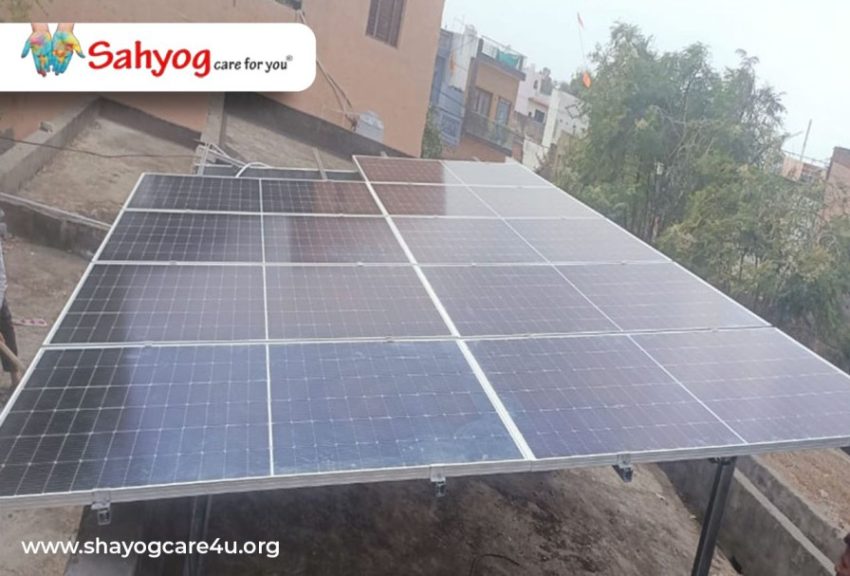
Solar energy in India has stopped being a future promise and started becoming a present-day reality. Rooftops in small towns now double as power stations, government schools run computer labs on sunlight, and an entire new category of jobs has emerged around installing, wiring, and maintaining panels. Behind this shift sits a quieter, equally important story: someone has to build all of this, and that “someone” increasingly includes people the job market had almost written off.
India’s Solar Energy Story, in Numbers
India’s solar capacity has grown at a pace few countries can match. As of mid-2026, the country’s total installed solar capacity reached 162.15 GW, a roughly 57-fold increase from just 2.82 GW in 2013-14, making India the world’s third-largest country by installed solar capacity. Rooftop solar has been a major driver of this growth, with the government’s PM Surya Ghar Muft Bijli Yojana scheme benefiting over 47 lakh households as of mid-2026 alone. All of this feeds into India’s larger target of reaching 500 GW of non-fossil energy capacity by 2030, a goal the country is currently on track to meet.
The Skills Gap Behind the Solar Boom
Numbers this large don’t materialise on their own. India’s renewable energy sector has already created more than 450,000 direct jobs in manufacturing and installation, and the Ministry of New and Renewable Energy estimates the sector will need over 300,000 additional skilled professionals by the end of 2026 alone, up sharply from around 180,000 as recently as 2024. Solar panels need trained installers, maintenance technicians, and system designers, and that demand is growing faster than the formal training pipeline can currently supply.
This is exactly where a dedicated NGO for solar energy can add real value, not by competing with the solar industry, but by feeding it with people who are ready to work the moment they’re trained.
How Sahyog Care for You Is Building Solar Capacity Through People
Sahyog Care for You has approached India’s solar moment from an unusual but effective angle: training veterans for it. Many Indian Army personnel retire relatively young, often in their late thirties or forties, carrying discipline and technical aptitude but facing a genuinely uncertain civilian job market. Sahyog Care for You’s Solar PV Installation training equips these veterans with hands-on, practical skills directly relevant to India’s fastest-growing energy sector, backed by reorientation support, CV preparation, and guidance on navigating civilian employment, so that training translates into an actual job rather than just a certificate.
Alongside this workforce-building effort, the organisation has put solar energy directly to work in communities. Solar street lights installed in Maharashtra now provide clean, reliable lighting without depending on the conventional grid, while solar panels installed across ten government schools in Delhi-NCR, three in Faridabad and seven in Gurgaon, cut electricity costs and give students a real-world example of clean energy at work in their own classrooms. Together, these initiatives help reduce approximately 50 metric tons of CO₂ emissions every year, equivalent to the annual carbon absorption of roughly 2,100 mature trees.
Why CSR Renewable Energy Projects Matter Here
For companies looking to meet their sustainability commitments while creating measurable social impact, this is precisely where CSR renewable energy projects can do double duty. Funding a school’s solar panels or a set of solar street lights delivers a visible environmental outcome, while funding a veteran’s Solar PV Installation training builds a skilled workforce the entire sector needs, not just the company’s own supply chain. Very few CSR categories offer this kind of layered return: emissions reduced, infrastructure modernised, and livelihoods created, all from the same underlying investment in solar energy.
Choosing the right implementation partner matters just as much as choosing the cause. A genuine NGO for solar energy should be able to show installations that are already running, training programs with real placement outcomes, and transparent reporting on both environmental and employment impact, rather than a proposal that exists only on paper.
Get Involved
India’s solar transition still needs many more hands than any single organisation can train or install. Individuals can volunteer time toward community solar projects or spread awareness about clean energy adoption. Companies evaluating CSR renewable energy projects can fund additional school installations, solar street lighting, or veteran training cohorts, each one adding directly to India’s growing base of solar infrastructure and solar-skilled workers.
A cleaner energy future for India is being built rooftop by rooftop, streetlight by streetlight, and one trained installer at a time. For Sahyog Care for You, that future is already taking shape.