
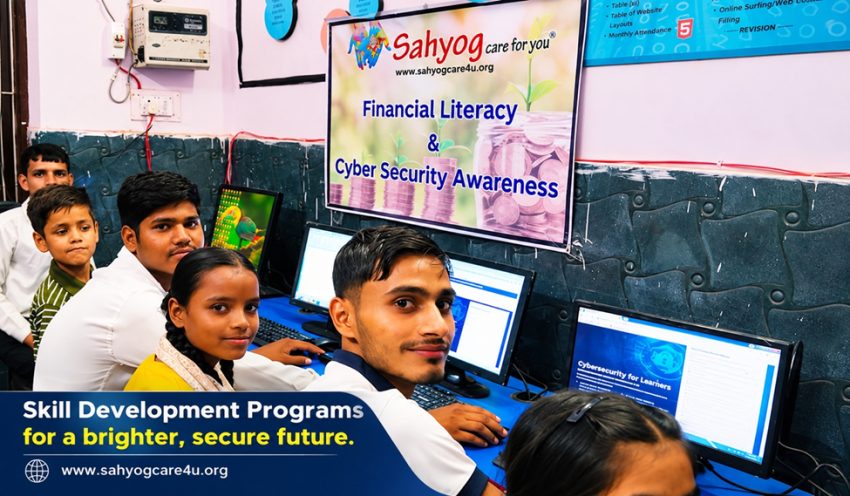
Every job applicant knows the rule: claims mean nothing without proof. Skill training programmes should be held to the same standard. Plenty of them promise a better future, but the real test is simpler, did the people who went through it end up with work, income, and confidence? So here is a programme’s résumé, written the way a good one should be, with objectives, experience, skills, and results you can check.
Objective
To turn training into livelihoods. Only around 4% of India’s working-age population has received formal vocational training, and the country trains fewer than 7 million people a year while roughly 12 million enter the workforce over the same period. Even where training does happen, it doesn’t always lead to a job, with one major national skilling scheme reporting that only about 21% of trained candidates secured employment afterward. A certificate is not a career. Sahyog Care for You’s objective is to close that gap, by designing every course around the job, or the business, waiting at the end of it. That is the standard a genuine NGO for Skill Training should be judged against.
Experience: The Ground It Covers
More than two decades of work in education, livelihoods, and community development sit behind this programme. In Delhi, Vocational Training Centres in Mundka, Nangloi, Jaffarpur, Najafgarh, and Tagore Garden have trained nearly 17,000 women and youth in Computer, Tailoring, Beauty Culture, and Tally, with skills then connected to real enterprises through a Self Help Group model. Beyond the capital, training for the armed forces community has reached over 22,000 beneficiaries across the Indian Army (AWPO), CRPF, BSF, RAF, ITBP, and Delhi Police, from the coasts of Trivandrum to the hills of Uttarakhand, the deserts of Rajasthan, the fields of Punjab, the valleys of Jammu & Kashmir, and the heartlands of Odisha. Running centers across several parts of Delhi and the wider region, year after year, is what separates a Top NGO in Delhi NCR from an organization with a single training room and a good brochure.
Skills: What The Programme Can Teach
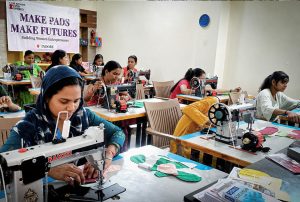
The skill set is deliberately broad, because the people it serves are not one group with one need.
For youth and women: basic and advanced IT, Tally and accounting, digital marketing and AI, BPO and call-centre work, web and graphic design, stitching and tailoring, beauty culture, and bakery training. Alongside these sit financial literacy, digital literacy, and cyber safety sessions, so that the income people earn is income they can manage and protect.
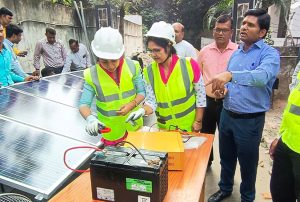
For veterans: Solar PV Installation, Tally Prime, and Logistics and Supply Chain Management, chosen because they lead to dignified, in-demand work. Many jawans retire in their late thirties or forties with families still depending on them, so reorientation support, CV preparation, and guidance on applying their skills in a civilian job market come built in.
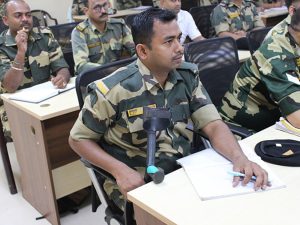
For differently abled jawans: specialized short-0term courses covering cyber security, asset and liability management, emotional intelligence, and stress management, opening doors to desk-based employment. Though they may no longer wield a rifle like their peers, they now hold the mouse with pride.
Key Achievements: Proof, Not Promises
The strongest line on any résumé is the one a stranger can verify.
At Project Annapurna, 135 women, war widows, wives, and dependents of armed forces personnel, have been trained in baking, business management, customer service, financial literacy, and marketing. Two Self Help Groups of 10 women each have been formally handed ownership of their bakery units, which generate a monthly income of ₹1,20,000 to ₹1,50,000 per unit. These women did not receive a certificate and a handshake. They received a working business.
Elsewhere, women run Water ATMs as Self Help Groups, earning an income while supplying safe drinking water at ₹1 for 10 litres. Veterans are learning to install the solar panels India’s clean-energy transition depends on. Differently abled jawans are moving into desk-based roles. Each outcome is a person with an income, which is the only metric that matters here.
Certifications And Standards
Training is only as useful as the market’s willingness to recognize it. Courses are structured around skills employers are actively hiring for, with certification pathways aligned to national skilling bodies, and the programme is registered with the 12A, 80G, FCRA, and CSR-1 credentials that corporate partners and donors look for when evaluating who to trust. Those credentials matter for funders just as certificates matter for trainees.
Personal Statement: Why The Model Works
Three things recur across every track. First, the course is chosen backwards from the job or enterprise, not forwards from whatever was easy to teach. Second, training is paired with the unglamorous support that makes it stick, CV preparation, reorientation, equipment, and in some cases outright ownership of the business. Third, nobody is treated as a single category. A war widow starting a bakery, a veteran moving into logistics, and a young woman learning digital marketing all need different things, and the programme is built to give each of them exactly that.
References And Next Steps
The best reference a skill training programme can offer is a graduate’s income. To keep adding to that list, the programme needs continued support: sponsoring a training cohort, funding equipment for a new enterprise, volunteering as an industry mentor, or simply pointing someone toward a course that fits. Companies and donors evaluating an NGO for Skill Training with outcomes they can verify will find them here. And anyone asking who the Top NGO in Delhi NCR really is in this space can start where any good hiring manager would: by checking the references.