
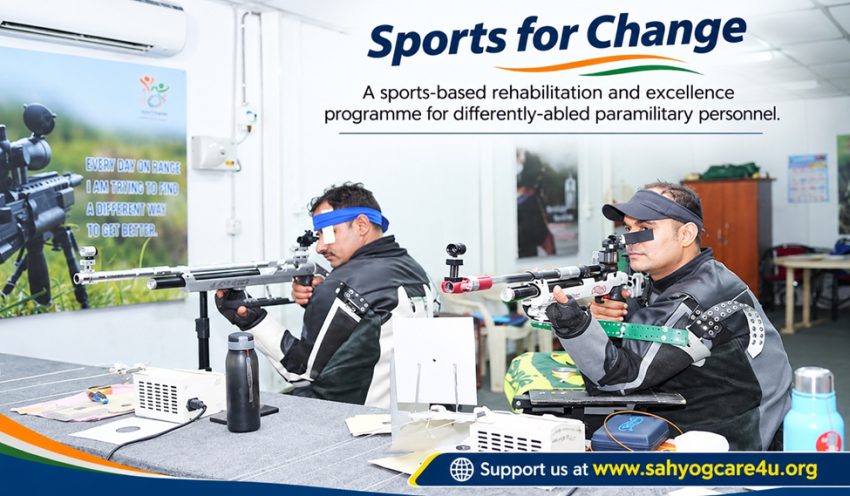
Military training teaches the body to obey the mind: steady hands, controlled breathing, an eye that does not waver. An injury in the line of duty changes what the body can do. It does not erase the discipline underneath. The real question is whether anyone gives that discipline somewhere to go.
Sport as the Next Mission
Sports for Change is a sports-based rehabilitation and excellence programme designed by Sahyog Care for You for differently-abled paramilitary personnel, including those injured during service. Its idea is simple and ambitious: treat these personnel not only as people to be supported, but as athletes to be developed.
That distinction matters. Welfare programmes often stop at recovery. This programme is built around a pathway from recovery to competitive excellence, using sport to restore physical strength, mental resilience, confidence, and a renewed sense of identity.
Why Para Archery and Para Shooting
The programme is built around two disciplines: Para Archery and Para Shooting. Both reward precision, focus, and control, qualities that disciplined service personnel already carry. Both can also be adapted to different physical conditions, which makes them well suited to inclusive sports training for a group whose needs vary widely.
For someone relearning what their body can do, these sports offer something specific. Progress is measurable, every arrow and every shot is feedback, and improvement comes from patience and technique rather than raw physical strength alone. That makes confidence something earned, not simply encouraged.
A Training Model Built Around the Whole Athlete
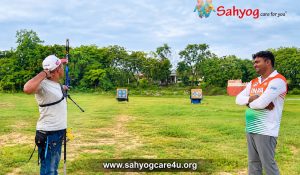
Recovery and performance are treated as one process in the programme’s design. Professional coaches lead training in both disciplines, with junior trainers supporting daily sessions, and the equipment is specified to international Para-sports standards, including electronic target systems for shooting. Alongside the sport itself, physiotherapy supports recovery, strength-building, and posture correction, while fitness plans are tailored to each athlete’s disability type and physical condition.
Nutrition is part of the model too. Athletes receive personalized diet plans, along with awareness sessions on hydration, recovery nutrition, and energy management, because an athlete who is relearning their body needs the right fuel as much as the right technique.
Safety is part of the design, not an afterthought. Training protocols call for protective gear, warm-up routines, and physiotherapy supervision, and athletes are oriented on equipment handling and discipline before they begin. This is what a serious NGO for Sports has to get right: rehabilitation and high performance only work together when the athlete’s wellbeing comes first.
Tracking Progress, Individual by Individual
No two athletes progress at the same pace, and the programme model recognizes this. Each athlete begins with a baseline assessment of fitness and performance. Progress is tracked regularly against benchmarks, and individual improvement plans are built from that performance data. The aim is to support each person according to their own capacity and improvement curve, rather than measuring everyone against a single yardstick.
Competition, Recognition, and Belonging
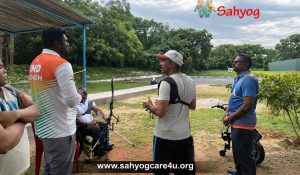
Training is only half the picture. The programme is designed to prepare athletes for state and national-level competitions, with trial events and simulated matches to build match experience, and to facilitate participation in recognized Para-sports tournaments. Performance is documented along the way.
Competition does something rehabilitation alone rarely can. It gives an athlete a reason to prepare, a stage to perform on, and an audience that sees an athlete rather than an injury. India’s Para-sports performance has improved significantly in recent years, which shows what proper infrastructure and exposure can do. The programme extends that opportunity to personnel who have served the country in uniform.
Mind as Much as Muscle
Physical recovery is only part of what an injury takes. Confidence, routine, and a sense of purpose often go with it, and they are harder to rebuild than strength. The programme is designed to address this directly, using sport as a way to strengthen the mind alongside the body.
Regular training gives each day a structure. Precision sports demand calm, steady focus, which builds mental resilience. Visible progress, one improved score at a time, restores the feeling of being good at something. For personnel who were used to purpose and teamwork in uniform, being part of a training group also offers something that matters as much as the sport itself: belonging.
From Injured Personnel to National Assets
The programme’s central belief is that disability and excellence are not opposites. A person who was injured in service can still compete, still win, and still stand as a source of national pride. The shift the programme aims for is not only physical. It is a shift in how these athletes see themselves, and in how the country sees them: not as injured personnel, but as athletes whose resilience, courage, and discipline inspire others.
That is the quiet power of Sports for Change. It takes what service built, the focus, the discipline, the refusal to quit, and gives it a new arena. Sport becomes a way to rebuild confidence, restore dignity, and keep serving the nation through sporting excellence.
For anyone looking for an NGO for Sports that treats rehabilitation and competitive excellence as one continuous journey, this is the model in practice: coaching, care, and competition working together so that an injury becomes a chapter in an athlete’s story, not the end of it. Dignity, resilience, and sporting excellence are not separate goals here. They are the same one, seen from different angles.