

Chapter One: The Cupboard
I arrived at a government school in a cardboard box, part of a donation drive somebody organized with good intentions. Someone signed a register, stacked me on a shelf inside a steel Amirah, and locked the door. That was 2019. I did not come back out until 2024.
I’m not special. Ask any book that’s ever landed in a school without a real library, and you’ll hear roughly the same story. We’re not unwanted, we’re just unreachable, filed away in a cupboard nobody has the time, the space, or the reason to open. Some of us got lucky and ended up near the top of the stack, close enough to the door that a curious child might have spotted our spine if the cupboard had ever been left ajar. Most of us just settled into the dark and waited, the way books do, without much choice in the matter.
Chapter Two: The Room I Lived In
The room outside my cupboard wasn’t much better off than I was. Paint peeling in long strips off the walls. A single bulb that worked on alternate days. No fan, which meant nobody stayed long enough in summer to notice the books at all. This isn’t unusual, by the way. National data has shown that well over eight in ten Indian schools report having “a library,” and I used to find that number almost funny from inside my cupboard, because having a library on a government form and having a room a child actually wants to enter turned out to be two very different promises.
It got worse before it got better, if I’m honest. Reading surveys of children in schools like mine have found that a troublingly large share of students, even by the time they reach the later primary grades, still struggle to read a text meant for children two or three years younger than them. I used to wonder, gathering dust, whether that had anything to do with rooms like mine, locked away instead of lived in. I suspect it did. A child can’t build a reading habit on a book they’ve never been allowed to touch.
Chapter Three: The Renovation
Then, one year, everything changed at once. A team showed up talking about whitewash and paint, and within days, the walls I’d been staring at through a crack in the Amirah door went from grey and peeling to genuinely bright. Then came murals, BALA paintings, someone called them, alphabets and maps and illustrations that turned the walls themselves into something worth reading even before a single book came off the shelf. A fan appeared, finally. Proper lighting replaced the bulb that used to flicker its way through half the school day. New shelves went up that didn’t wobble every time someone reached for a title on the top row. An Amirah arrived specifically for the more fragile or valuable books, the kind that used to get left out and damaged. And then, almost as an afterthought that turned out to matter enormously, a computer arrived in the corner, something I’d genuinely never seen up close before.
This is the part where I learned what a NGO for School Libraries actually does differently from a well-meaning donation box. It doesn’t just deliver books and hope for the best, it rebuilds the entire room around them, plumbing the practical stuff, the fans and the furniture, together with the parts that make a room feel worth visiting in the first place. Nobody ever told me construction could feel this personal, but watching a room get rebuilt around you, book by shelf by chair, does something to a story that’s spent five years waiting in the dark.
Chapter Four: The Day Someone Finally Opened Me
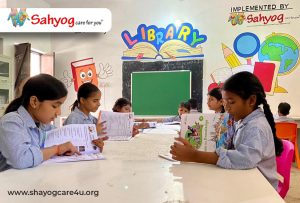
I still remember it, if books can remember things. A girl, maybe ten years old, pulled me off the shelf because the cover caught her eye under the new lighting. She sat down at an actual table, in an actual chair, under a fan that was actually running, and read me from the first page to the last without anyone telling her to. I’d waited five years for that. It took her forty minutes.
She came back the following week for a different book, and the week after that for another, and I like to think some small part of that habit started with me, though I’ll admit every book in this library probably tells itself the same story. That’s the entire point of a library, really. Not the shelf, not the room, not even the paint on the walls, just that one moment where a child chooses a book because they want to, not because a teacher assigned it, repeated often enough that it turns into something closer to a habit than an event.
Chapter Five: Where I Live Now
These days, I sit on a shelf in a government school library in Gurgaon, one that didn’t exist in any usable form a few years ago. Sahyog Care for You built the room I now live in from the ground up, part of a broader effort that treats reading as something worth building real infrastructure for, not just donating boxes toward. The organization doesn’t stop at the renovation either, teachers get trained, the room gets checked on, and children get encouraged back through the door long after the paint has dried and the novelty of a new space has worn off. Being an NGO in Gurgaon with an actual library to point to, rather than a promise on paper, means the room I’m in gets maintained and kept running rather than quietly relocking itself the way my old cupboard did.
Epilogue: An Invitation
There are still cupboards like my old one sitting in schools right now, books waiting years for a room worth opening, children walking past a locked Amirah every single day without knowing what’s inside it. If you’re looking to fund a renovation, donate books that will actually get read, or simply learn more about how a library like mine came to exist, an NGO for School Libraries and reading spaces built to last is exactly what closes that gap. And if you happen to be nearby, an NGO in Gurgaon already running rooms like this one would be glad to show you what a formerly locked cupboard can turn into.
I waited five years to be read. No book, and no child, should have to wait that long again.