
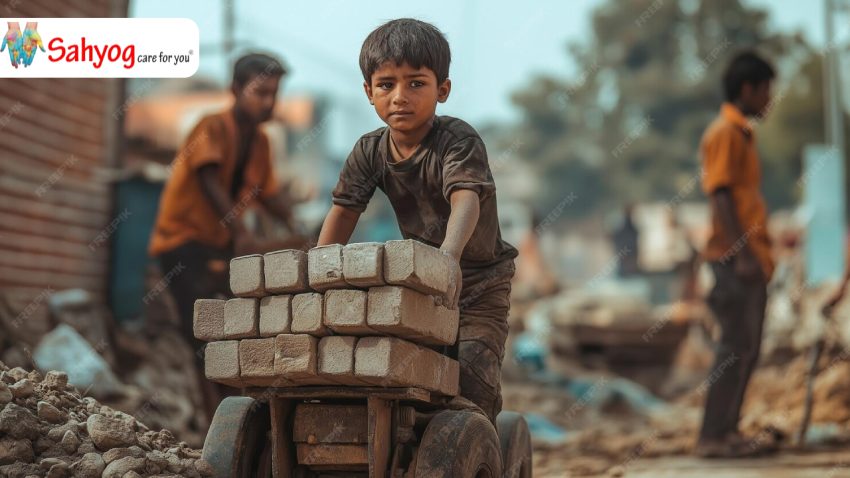
Child labour remains a pressing social issue in many parts of the world, depriving children of their basic rights to education, safety, and a healthy childhood. While efforts to rescue children from hazardous work are crucial, the journey does not end there. Effective child labour rehabilitation is essential to ensure that rescued children are reintegrated into society and given opportunities for a better future.
What is Child Labour Rehabilitation?
Child labour rehabilitation is the process of assisting rescued children in education, healthcare, emotional healing and development of skills. It does not only target the immediate elimination of children in labour but also the reasons that pushed them to the labour including poverty, inability to access education and social inequality. An organized child labour rehabilitation program will focus on restoring dignity and offer long term stability.
Key Challenges in Rehabilitation
Despite growing awareness, several challenges hinder the success of child labour rehabilitation initiatives. Economic dependency is one of the major concerns. Most families are dependent on the payment received by their children, and there is no option on how to avoid them going back to work. Rehabilitation may not be sustainable without funding or other means of livelihoods to support the families.
The other issue is the psychological effects on children. A large percentage of rescued children have been abused, exploited or subjected to poor working conditions which result in trauma and low self-esteem. These emotional scars cannot be easily solved and do not always have to be addressed by professional counseling and long-term care.
Additionally, it can be an obstacle due to the absence of access to good education. Children who have spent years working often struggle to adapt to formal schooling due to learning gaps and social stigma. This renders child labour rehabilitation programs to incorporate bridge courses and flexible learning programs.
Long-Term Solutions for Effective Rehabilitation
A multi-faceted approach is required to make the child labour rehabilitation more effective. To begin with, it is important to enhance education access. Governments and organizations should also see to it that children who are rescued are enrolled in school are given the support that they need, through scholarships, provision of school supplies and mentoring.
Second, economic empowerment of families can go a long way in mitigating the chances of re-entering labour by children. Programs on skill development, employment and financial aid to parents can be used to provide a stable environment in which children can concentrate on education.
Third, community awareness is important. Attitudes towards child labour and exploitation can be changed by educating communities on the negative impacts of child labour and the value of education can help avoid exploitation. The partnership of governments, NGOs, and local communities is also a crucial factor to continue the progress.
Conclusion
Child labour rehabilitation is not only rescuing the children but restoring lives. Stakeholders are able to develop long-term solutions to ensure children are safeguarded and empowered to achieve their full potential by solving economic, educational and psychological issues. It must be a concerted and a long-term action to make sure that all children have a safe, educated, and dignified future.