
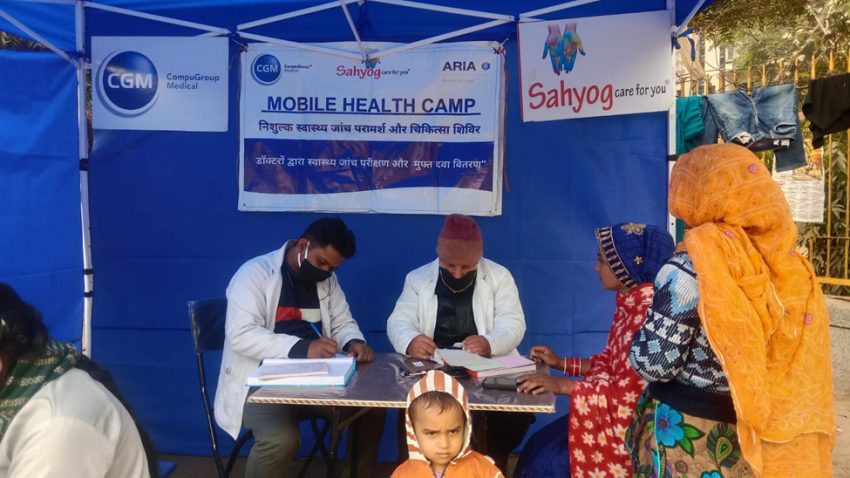
What if the biggest barrier between a sick child and a doctor wasn’t the illness — it was the distance to a clinic, or the cost of getting there? For thousands of families across West Delhi, that barrier disappeared this winter, one health camp at a time.
Between 15 December 2025 and 23 March 2026, Sahyog Care — a dedicated NGO for healthcamps — ran a large-scale mobile health camp drive across Delhi and NCR, bringing free consultations, ECG screenings, and blood tests directly into neighborhoods that rarely see a doctor at their doorstep.
The Numbers Tell the Story
Across 37 camps, the drive reached a total of 4,402 beneficiaries — real people, real families, real children who got a health check they may not have otherwise had access to. Of these:
- 2,586 adults received consultations and screenings
- 1,752 children were examined, including 976 boys and 776 girls
- 1,321 participants received their blood test reports on the spot
- 88 people were referred for further ECG evaluation, with 40 confirmed ECG cases identified early — a critical window for timely treatment
These aren’t just statistics. Every ECG referral is a heart condition caught before it became an emergency. Every blood report handed back is a family that no longer has to guess what’s wrong.
Where the Camps Went
One of the things that sets this drive apart is reach. Instead of waiting for people to travel to a hospital, the camps went to them — into residential colonies, resettlement areas, and community spaces across Delhi, including Tagore Garden, Meera Bagh, Chander Vihar, Jawala Puri, Mundka, Najafgarh, Jaffarpur, Nilothi, Nihal Vihar, Raghubir Nagar, Bakhtawar Pur, Shiv Vihar, Rajiv Nagar, Shakur Basti, Prem Nagar, Mangolpuri, Kutub Vihar, Kuwar Singh Nagar, Peera Garhi, Mukund Pur, Shiv Ram Park, Paschim Vihar, and Hind Vihar, along with camps in Noida and Gurgaon.
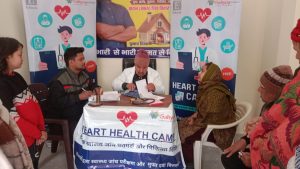
The drive also extended a hand to some of the most overlooked groups — running dedicated camps at an old-age home in Chhawala and a relief camp in Peera Garhi, proving that health equity isn’t just about children, it’s about anyone who’s been left out of the system.
Why This Matters for Delhi’s Underserved Communities?
For any NGO in Delhi working on grassroots healthcare, the real challenge isn’t ambition — it’s logistics. Reaching 37 different locations over three months, screening thousands of children for heart conditions, and getting blood reports back into people’s hands isn’t a small feat. It requires coordination, consistency, and a team that shows up even when the work is repetitive and unglamorous.
That’s exactly what this data reflects: not a single flashy event, but a sustained, methodical effort — camp after camp, neighborhood after neighborhood — to make sure no child’s cardiac condition or treatable illness slips through unnoticed simply because their family couldn’t afford a hospital visit.
A Model Worth Learning From
If you’re evaluating an NGO for healthcamps to support or partner with, this kind of transparent, location-by-location data is exactly what to look for. It shows where the money and effort actually go, who’s being reached, and what outcomes are being tracked — not just how many people showed up, but how many were referred, diagnosed, and followed up with.
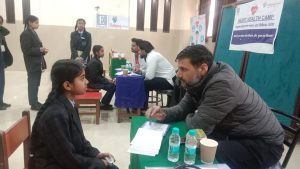
Similarly, if you’re searching for an NGO in Delhi focused on children’s health, the presence of dedicated children-only camps (like the multiple sessions run in Nihal Vihar and Nilothi, where children made up the overwhelming majority of attendees) signals a genuine pediatric focus, not just a general health drive with children as an afterthought.
The Bottom Line
Behind every number in this report is a child who got checked, a parent who got peace of mind, and a community that got a little more access to the healthcare it deserves. That’s what consistent, ground-level work looks like — and its why sustained health camp drives, run by committed organizations, continue to matter in a city as vast and unequal as Delhi.