
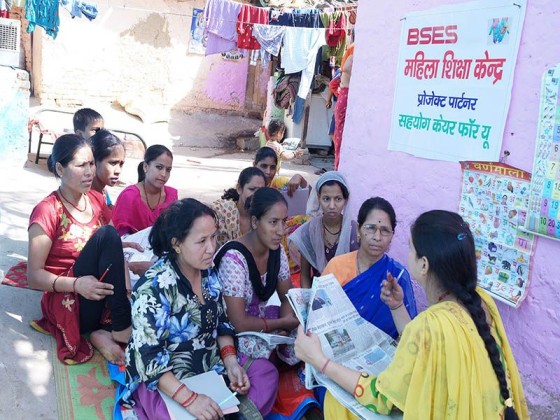
Education is often seen as something meant for children and young students. But to most women in India, education is halted when marriage or widowhood comes into their life. Home chores, financial problem, societal demands, emotional stress silently relegate education to the backburner. That is where an NGO for women education can be quite important to open the doors that were closed before.
Why Married and Widowed Women Are Left Behind
Women who are married are usually burdened with numerous duties. Domestic responsibility, childcare, and taking care of other relatives do not give time to improve oneself. Even in conservative communities, education is often considered unnecessary when a woman is married.
Even greater problems are experienced by widowed women. Most of them become financially unstable, isolated, and lack confidence. Education is not a priority, but a far-fetched reality. An NGO for women education realizes that such women require responsive, supportive and respectful learning possibilities that can be incorporated in their realities.
The Learning Gap That Goes Unnoticed
The learning gap between the married and widowed women has rarely been discussed. Most of these women had discontinuous schooling during their childhood. There were other women who never received a formal education in the first place. The divide increases with time and influences their earning, making of sound decisions and obtaining of education to their children.
An NGO for women education does not just emphasize on literacy but also on learning by doing. This involves fundamental reading and writing, financial literacy, IT knowledge, and vocational education. This kind of learning will enable women to be more confident and self-reliant in their everyday life.
Flexible Education Models That Work
The conventional classroom arrangements are incompatible with most of the married and widowed women. Long courses and fixed timings are usually discouraging. The models embraced by an effective NGO in Woman Education are flexible, i.e. short-term courses, community-based education and part-time education.
Education is available in learning centers in the neighborhood, self-help group sessions and mobile education units. To the extent that women have an opportunity to study at home and at their own convenient time, participation goes up dramatically.
Emotional Support Along with Education
To widows in particular, education is not just about books. It is also important to heal emotionally and build confidence. A serious NGO of Women Education develops safe zones where women would be respected and heard.
Women get back to self belief with the assistance of peer learning, group discussions and mentoring. With the assistance of education and emotional support, women become more persistent in their further learning and the meaningful use of their skills.
Long-Term Impact on Families and Communities
Women who are educated can have the influence because of their education to shape families. Educated married women are able to handle their family financial prospects in a better manner, educate their children, and make their own informed health decisions. Educated widows will be able to restore their lives with respect and self-sufficiency.
An NGO for women education hence does not only have an impact on individual learners. The community is given an advantage when women are educated, competent and self-assured members of the society.
Breaking Social Barriers through Awareness
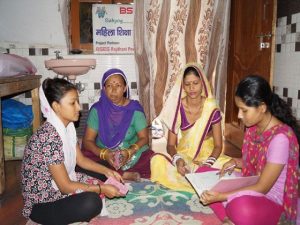
Social resistance is one of the greatest challenges. Families will wonder why an educated woman is necessary. A special NGO for women education education collaborates with communities to transform this attitude.
The awareness programs and community involvement by these organizations demonstrate that the education of women empowers families instead of breaking the tradition. Slowly, there is a positive reception and increasing numbers of women emerge to study.
Conclusion
In order to succeed in bridging the learning gap between married and widowed women, there is a need to be patient, and develop long-term commitment. A NGO for women education should not base its attention on age and marital status, but rather potential. Sahyog remains deeply committed about this mission. Using its specific actions, community development actions, or integrative learning projects, Sahyog has remained committed to strengthening the education of women, so that marriage or widowhood will not be an obstacle to learning, growth or dignity.
Come forward and donate generously towards Sahyog’s education for women program and many other initiatives that have been taken up by us to reach out to the most denied groups in the society.