
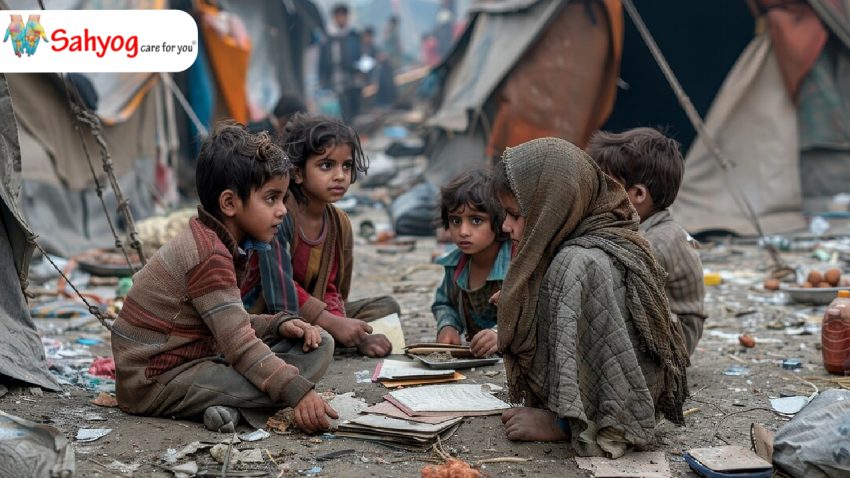
The situation of India is complex and varied in its development and the obstacles to which the underserved groups are exposed. The strategy adopted by an NGO that has to work with the marginalized communities has to be shaped according to the place where it functions i.e. in the urban settlements or in the rural areas. Although the main objective of the social upliftment is always the same, the approaches, collaborations, and interventions can vary greatly.
Such differences must be comprehended by the donors, policymakers, and organizations that intend to maximize their influence. This blog discusses the ways in which an NGO working with marginalized communities varies its approach in urban and rural settings.
Learning to Understand the Context Gap
The marginalization in urban and rural communities is different. Due to overcrowding, migration, informal employment and un-affordable services, issues are known to be a problem in cities. In rural situations, the issues typically involve geographic seclusion, weak infrastructure, and reduced institutional coverage.
Due to this difference, a successful NGO working with marginalized communities will commence with needs assessment on a local level instead of using a universal template.
Major Areas of Urban Interventions
Urban interventions usually focus on large density population in slums or informal settlements. In this case, speed, scalability and access of services are vital.
-
Livelihood and Skill Development
Informal employment is a source of livelihood to many marginalized families in the cities. NGOs thus are more interested in short-term market-based skill training like retail training, digital literacy, and vocational training.
A mature NGO that serves marginalized communities usually collaborates with the local industries and placement agencies to make the trainees find employment within the shortest time possible.
-
Migrant children are entitled to Education Continuity
The migration to cities interferes with the education of a number of children. NGOs manage this by way of bridge courses, after school centers and online learning assistance.
The reason why flexible learning models are significant is that urban families change their locations quite often. A receptive NGO that operates within the marginalized communities develops portable education, which relocates with the kid.
-
Availability of Urban Services to Health
Disadvantaged populations tend to have problems with the cost and recognition of hospitals despite the fact that there are more hospitals in cities. The NGOs target health camps, referral linkages, and preventive care awareness at the urban settlements.
The aim of any NGO dealing with the marginalized groups in urban areas is to enhance navigation of the systems in place as opposed to constructing totally new systems.
The Major Areas of Focus in the Rural Interventions
Rural plans typically involve more involvement of the communities and extended periods since the services or even the existence of such services might not be sufficient.
-
Enhancing Primary Education
In the rural setting, the focus usually focuses on enhancing basic education. The NGOs collaborate with the government schools to improve on the quality of teaching, attendance, and literacy among the learners in the lower grades.
A dedicated NGO that partners with the marginalized groups can also educate the local volunteers to facilitate the multi-grade classes where there is a shortage of teachers.
-
Health and Nutrition in Community
Rural regions might not have healthcare facilities as opposed to the urban areas. Mobile health units, maternal health interventions, and nutrition campaigns are also common with NGOs.
In this case, NGOs that collaborate with the marginalized communities tend to adopt a service-delivery role as opposed to facilitation.
-
Feminist Groups and Self-Help Organization
Women self-help groups (SHGs), financial inclusion and livelihood cooperatives are heavily emphasized as rural empowerment initiatives. These patterns are successful as rural populations are usually more socially cohesive.
An effective NGO that works with marginalized communities takes time to create trust upon which they initiate income-generating programs.
Differences in Work in the City and the Country
Other than focus on programs, the difference in operational strategies also exists.
The features of urban models:
- Faster program cycles
- Higher population density
- Additional dependence on alliances.
- Increased mobility and scalability.
- High concentration on access to the services.
- The rural model characteristics:
- Lengthening engagement periods.
- Deep community involvement
Infrastructure development in most cases was a necessity.
- Increased focus on behavior change.
- Existence of a heavy dependence on local leadership.
A flexible NGO that collaborates with marginalized communities develops individual implementation playbooks (playbooks) in each region.
Sharing of Problems in Both Environments
Regardless of the contextual differences, the following challenges are usual:
- Long-term financing needs.
- Measuring long-term impact
- Community trust-building
- Volunteer retention
- Technology adoption gaps
To solve these, there is need to have well-developed monitoring systems and sustained stakeholder involvement.
The Way Forward
The future is in the hybrid, data-driven models, which combine the merits of an urban and a rural approach. The next stage of social development will entail technology, community ownership, and cross-sector partnerships.
A new NGO working with marginalized communities will grow to utilize data analytics, internet platforms and localized leadership to amplify impact and be context-sensitive.
Sahyog is actively working in this direction to create meaningful and inclusive impact across underserved communities.