
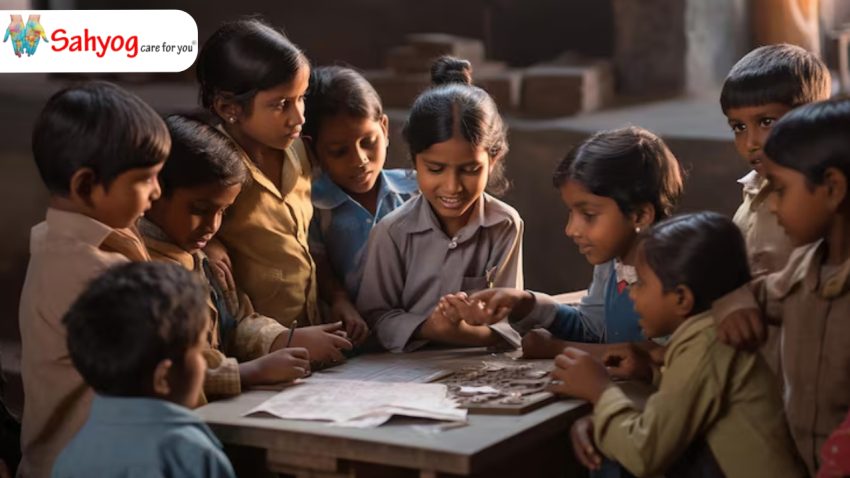
The Indian education environment is changing fast due to the presence of technology and need to ensure that all children are able to access quality education. An NGO for child education is an important part in this change since it will facilitate the digital gap between underserved populations. These organizations are enabling these children to have access to structured learning, interactive content and skills building programs that were previously not accessible to them through innovative digital learning programs.
The following blog discusses the way digital programs initiated by an ngo to educate children are transforming the learning outcomes and establishing a long-term effect.
The increasing Appetite towards Digital Education
Accessibility to good educational resources remains a problem to many children in rural regions and economically disadvantaged urban communities. Conventional classroom facilities in most cases are not sufficient to support the needs of the diverse students today. This is the point that a proactive ngo on child education intervenes with the introduction of technology based learning models.
Digital education helps:
- Access isolated and marginalized populations.
- Present standardized learning resources.
- Support self-paced learning
- Improve student engagement
- Realise continuity amid disruption.
Digital initiatives are becoming a viable and scalable solution as smartphones and the internet penetrate India.
Significant Digital Learning Programs
A good NGO for child education usually has a number of digital measures instead of basing on one action. Some of the most influencing initiatives are listed below.
-
Smart Classroom Programs
Increment of smart classes in government and low-income private schools is being established by many organizations. These classrooms have projectors, tablets, and ready-built digital contents that are in line with school curriculum.
Smart classrooms enhance lessons by being more visual and interactive to the students and this enhances their understanding. In the case of teachers, teachers give them well-organized lesson plans and lessen the reliance on rote teaching techniques. With a well-laid out ngo to child education program, the teachers too will be trained on how to utilize such tools.
-
Tablet and Device Distribution
One of the largest obstacles to digital learning is the access to devices. To overcome this, numerous NGOs supply students with technologies or cheap learning devices who do not have personal access to technology.
Such devices usually come with:
- Preloaded educational apps
- Offline learning content
- Practice worksheets
- Assessment modules
An NGO for child education assists in children studies outside school hours and thus students learn anytime since this is one of the ways of ensuring that they do not miss out on studies when they are at home since support may not be offered by their home communities.
-
E-Learning Apps and Mobiles.
Tailor-made e-learning is emerging as a way of doing things. These websites have organized disciplines like mathematics, science and language skills. Most of them are capable of operating on low-bandwidth connections.
An innovative NGO for child education will be future oriented such that such platforms will contain:
- Multilingual content
- Game-based learning modules
- Achievement monitors.
- Teacher and parent access
These aspects enhance the learning process as well as enable the organizations to track real-time impact.
-
Digital Teacher Training
Classroom technology can only be effective when teachers feel comfortable about using it. Realizing this, most NGOs spend a lot of money on digital capacity building of the teachers.
The training programs usually include:
- Using smart classroom tools
- Online evaluation.
- Managing hybrid classrooms
Designing online lesson plans empowering teachers, a child education ngo makes the technology a permanent component of the education system but not a temporary intervention.
-
Community Learning Centers
There are regions with poor internet connectivity in homes and in such cases, NGOs tend to create digital community learning centers. These facilities are places of collective use of computers, internet and guided learning assistance.
The use of such centers is various:
- After-school educational services.
- Digital literacy training
- Career awareness sessions
- Parent orientation programs.
By such hubs, an NGO for child education builds a learning environment that is inclusive benefiting the entire community.
Implementation Problems of Digital Initiatives
Regardless of the advancement, there are a number of obstacles to digital education programs:
- Poor connectivity to the internet in rural locations.
- Service and repair expenses of devices.
- Technological rejection.
- Demand of continuous updates of the content.
- Tracking real results of learning.
Partnerships, hybrid learning models, and constant field feedbacks can help successful organizations to address these challenges.
The Road Ahead
Digital learning is no longer a choice; it is a practice that is needed to achieve equitable education. The role of an NGO for child education will continue to increase as technology becomes cheaper and more affordable and accessible. There are more AI-based learning customization, expansion of vernacular content, and a greater involvement with government education systems in the future.
Technology that is used alongside great on-ground engagement will make the most significant and enduring difference in organizations.