
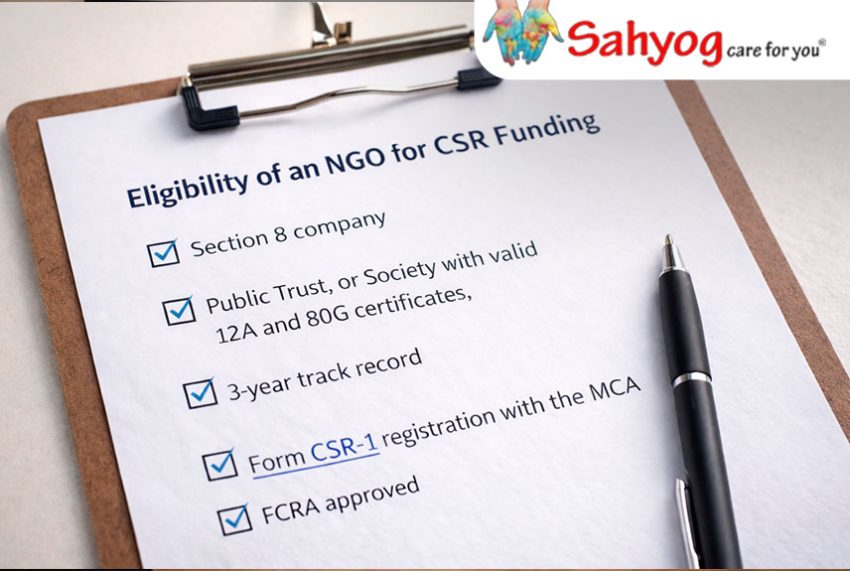
Corporate Social Responsibility is no longer a mere funding affair. In the modern world, companies should take care that their investments in CSR are not only compliant and transparent but also capable of making actual impact on the social world. This is what renders due diligence a very important process when choosing an NGO eligible for CSR funding in India. Unless adequate checks are put in place, even good CSR efforts may result in compliance risks and low impacts.
Finding the Value of Due Diligence
Due diligence assists firms in establishing whether a non-governmental organization has met legal, financial and operating standards under Companies Act. A NGO in India that will receive CSR funding has to meet certain requirements concerning registration, governance and track record. Close scrutiny will also make sure that the CSR finances are directed to organizations that will handle projects in a responsible manner and give quantifiable outcomes.
Maintaining Legal and regulatory Compliance
Regulatory compliance is one of the main causes why due diligence is a concern. The CSR regulations mean that companies can only cooperate with the NGOs according to the eligibility norms. NGO eligible for CSR funding in India must possess legitimate registrations, statutory approvals as well as congruence to the Schedule VII activities. These points are checked to keep the companies under the control of authorities and possible fines due to the collaboration.
Evaluation of Governance and Financial Transparency
Good governance is a must in the implementation of CSR. Due diligence enable the companies to evaluate the management of the NGO, decision-making and use of funds. An NGO that is eligible to receive CSR funding in India must have clear financial records and audited statements with clear reporting systems. Such practices will create trust that CSR funds will be utilized only in its social intended use.
Measuring Track Record and On-Ground Capability
The history of performance is usually a good predictor of success in future. The analysis of experience, finalized projects, and the final results of an NGO can make companies realize that it can implement CSR projects. A non-governmental organization that qualifies as a CSR financing in India and has solid field presence and relationship with the communities will be in a better position to execute projects effectively and tackle the challenges that arise on the ground.
Measuring Impact and Reporting Readiness
Today CSR requires a quantifiable contribution, not reporting of activities. Due diligence assist companies to realize NGOs with well developed monitoring and evaluation systems. An NGO eligible for CSR funding in India must be able to gather data, monitor the progress and compile orderly impact reports. This facilitates proper CSR reporting and builds on stakeholder confidence.
Minimization of Reputational and Operational Risks
Collaborating with the wrong organization would subject companies to reputational losses. Misuse of funds, bad governance, or absence of transparency may be a bad omen to the image of a company. Effective due diligence will allow identifying a NGO that the company will undertake its CSR funding in India with is in line with the values, ethics, and long-term CSR vision of the company.
Establishing Long-Term and Successful Partnerships
Due diligence is not distrust, it is about establishing good, long lasting partnerships. The more a company knows the strengths, systems and limits of an NGO, the more efficient the collaboration is. Partnership with a trustworthy NGO that could be funded through CSR in India allows businesses to strategize long-term projects, expand effective initiatives, and obtain regular social benefits.
Conclusion
Due diligence is part and parcel of responsible CSR planning. It protects compliance, promotes transparency and maximizes the impact of CSR investments. Through proper assessment and collaboration with the appropriate NGO eligible for CSR funding in India, firms can go beyond compulsory CSR and make a significant contribution to the social development without losing accountability and trust.