
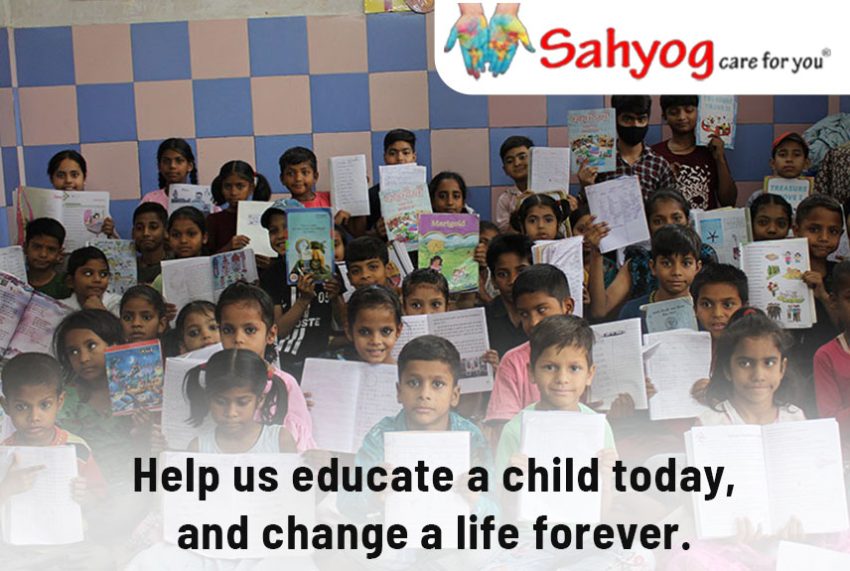
When we mention Indian lack of education, we usually refer to the rural places. Nevertheless, the crisis in education in slums is just as acute as well as sometimes more complicated in cities. The high rates of urbanisation have led to the development of congested communities in which children grow up in opportunity-deprived communities on one hand and opportunity-rich communities on the other. The role of an NGO for Child Education is not only significant in such settings, but quite vital at the same time.
The Invisible Education Crisis in Urban Slums
Slums are usually located near schools, hospitals and markets. On paper, access is easier as compared to villages. But the truth tells otherwise. Inadequate family income, constant migration, overpopulated classrooms and poor documentation continue keeping quite a number of children out of school. The population of slums is constantly changing as compared to the villages where people live close to each other. This complicates the process of supporting education on a long-term basis without specific intervention of an NGO for Child Education.
Poverty Amidst Proximity
The irony of the urban slums is one of the largest cities that are surrounded by poverty and affluence. Children observe malls, offices and private schools at a daily rate, but they are not provided with good education. Most families rely on the daily wages and the children are sent to work at a tender age. Here comes an NGO for Child Education who will provide bridge classes, flexible learning time, and systems that will realize the economic strain these families have to endure.
Migration and Interrupted Learning
Migrant workers who belong to different states live in the urban slums. The high mobility of children results in frequent changes of schools or even school dropouts. The language barrier and curriculum disparity make the issue worse. That is where an NGO in the area of Child Education is very important as it can guarantee continuity in the education, elementary literacy service and emotional security to the children who lead their lives in constant fear.
Lack of Safe Learning Spaces
Unlike rural areas, where open spaces can be used for community learning, urban slums struggle with space constraints. Children usually learn under insecure or unhealthy environments. NGOs contribute through establishment of safe learning centres in the society where children can enjoy a safe learning environment, interact and develop. With well-organized schemes, an NGO of Child Education will introduce order and structure into the otherwise anarchic lifestyle.
Beyond Schooling: Holistic Development
Education in urban slums is not just about books. There is exposure of children to crime, drug use, and child exploitation at a tender age. NGOs include life skills, hygiene awareness, emotional well being and parental counselling along with academics. It is this holistic approach that can make an NGO of Child Education more effective in Urban slums than traditional schooling over time.
Why Focused Intervention Matters More in Cities
The government systems usually have difficulties in managing the rapidly increasing populations in the cities. Through administrative gaps, slum areas are abandoned and children lack regular support of education. This is the role played by the NGOs who operate on the ground, following up on individual children, parents and making sure that no child is left behind just because they are in an informal settlement.
Conclusion: Be the Reason a Child Stays in School
Education can turn the path of children’s life- but only when it comes to them at the right time. Organisations such as Sahyog are on the ground to make sure that the children in the urban slums do not miss their opportunity to a better future. You can join this change by sponsoring education programs, donating funds, or even just bringing awareness about it. When you contribute to Sahyog, it is not just a donation that you are giving an NGO for Child Education; you are giving a child a chance to be out of survival and possibility.