
THE DIVIDE THAT’S EASY TO MISS
A job application form assumes you can fill it out online. A school assignment assumes you have somewhere to type it up. For a dropout, a migrant worker’s child, or a family that’s never owned a computer, these small assumptions add up into a real barrier — not because they lack ability, but because they’ve never had a fair chance to build the skill.
TEACHING THE SKILL ITSELF
As an NGO for Digital Literacy, Sahyog Care for You’s Education on Wheels initiative brings learning directly to dropouts, migrant families, and working children, bridging gaps in access to education and digital literacy that a fixed classroom can’t reach. The same commitment runs through Sahyog’s skilling centers, where basic and advanced computer courses, Tally, and web-design training are offered to youth and to Armed Forces families alike, turning an unfamiliar screen into a tool people actually know how to use.
MAKING SURE NO ONE’S LEFT OUT
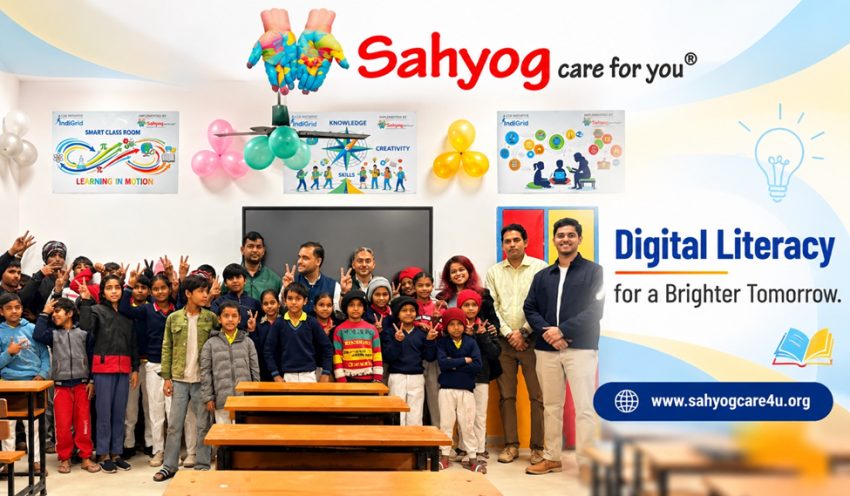
Teaching the skill only matters if the access exists in the first place. As an NGO for Digital Inclusion, Sahyog’s Smart Shala initiative has digitalized 20 government schools across Delhi-NCR and Haryana, bringing smart boards and interactive digital content into classrooms that would otherwise have none — closing the gap between a rural student’s classroom and an urban one, rather than letting it widen further.
WHY THE TWO SIDES MATTER TOGETHER
A digitalized classroom with no one trained to use it, or a trained student with no digital classroom to apply it in — either way, the divide stays open. What makes an NGO for Digital Literacy program work is the access an NGO for Digital Inclusion effort provides, and vice versa. Together, they’re what actually closes the gap, rather than shifting it from one side to the other.
GET INVOLVED
Sponsor a digital literacy course for a dropout or migrant child, or support a Smart Shala rollout that brings digital learning into a government school for the first time.